

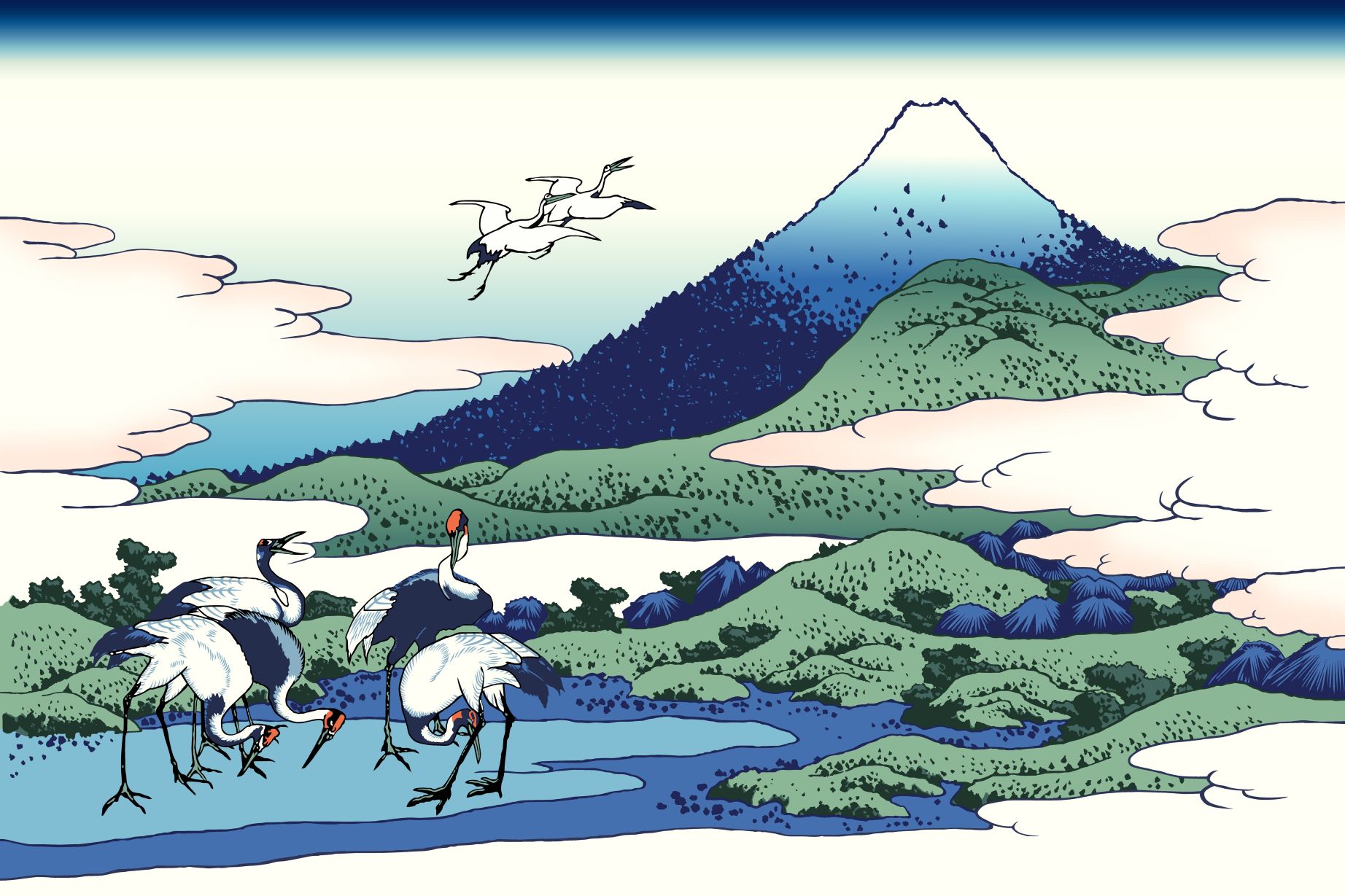


Edo woodblock print is a popular visual art form that developed in Japanese urban culture from the early 17 century to the late 19 century.
Edo woodblock print, widely known as “ukiyo-e ” in modern times, was not only a work of art but also played an important role as a source of information, entertainment, and fashion at the time.
In this article, we will explore the background of Edo woodblock print and how it developed after the Edo period.
1.Origins of woodblock printing and the prehistory of Edo woodblock print
The beginnings of woodblock printing in Japan
The beginnings of woodblock printing in Japan date back to the Nara period.
A representative example is the 1 million pagoda litany (hyakuman to darani) that was created in 764 by order of Emperor Shotoku. These were produced to pray for the peace and security of the country, the repose of the souls of the dead in wars, and the appeasement of calamities. They took the form of a small wooden pagoda containing printed copies of the same text.
The 1 million pagoda litany shows that printing technology was already in the practical stage in that large numbers of the same text were printed and distributed. At the time, however, woodblock printing was only carried out as part of a national project or Buddhist ritual and was not something that ordinary people saw on a daily basis.
From the Heian period to the Kamakura and Muromachi periods, woodblock printing came to be used in the production of Buddhist scriptures, Chinese classics, and academic texts. It developed mainly among temples and learned monks as a means of accurately conveying knowledge and teachings. The most important aspect of printed material in this period was the legibility of the characters, and the pictures only served to supplement the content.
Unlike the painterly woodblock prints that became more popular later in life, woodblock printing at this time had a strong character as printed material for reading.
Early modern times and the spread of illustrated books
Between the end of the 16 century and the beginning of the 17 century, type printing briefly became popular in Japan. Although it was revolutionary in that it could be printed efficiently by rearranging types, it was not always suitable for Japanese writing. For texts that mixed kanji and kana, or for books that required free layout, woodblock printing was easier to handle.
Because of this background, woodblock printing became mainstream again in the Edo period. With woodblock printing, the characters and pictures could be arranged together, and the content and atmosphere of the story could be conveyed visually.
In the early Edo period, many reading books with kana and illustrations were published. These were enjoyable for those without specialized knowledge, and were widely read by townspeople in urban areas. The experience of looking at illustrations while following the characters made reading more accessible and enjoyable.
As the publishing culture spread, pictures gradually gained prominence. The illustrations that were attached as part of a book eventually came to be appreciated as a single picture and developed into independent woodblock prints. This trend led to the later Edo woodblock prints and ukiyoe.
2.Urban Culture and the Formation of Woodblock Prints in the Edo Period
Population Growth and Township Culture in Edo
In the second half of the 17 century, Edo rapidly grew in population, and by the 18 century it had become one of the world's largest cities. While the samurai class took charge of politics, the townspeople played a central role in economic activity and culture. They were keenly interested in entertainment and fashion, and a culture of theater, red-light districts, and publishing flourished.
Edo woodblock prints were born against this backdrop. Instead of expensive hand-drawn prints, woodblock prints, which were available at relatively low prices, became widely accepted as a visual medium for ordinary people to enjoy the present.
Establishment of a publishing distribution system
One of the important factors that supported the development of Edo woodblock prints was the division of labor among artists, horishi, surishi, and hanmoto. Artists drew preliminary sketches, horishi carved woodblocks, surishi printed them on paper, and hanmoto handled planning and sales.
Juzaburo TSUTAYA, who was portrayed as the main character in the period drama BEROBO, was one of the leading publishers of this period. Hanmoto not only handled planning and sales of works, but also acted as an important liaison between artists and craftsmen.
This highly sophisticated division of labor made it possible for Edo woodblock prints to be mass-produced with a stable quality, and they became established as a commodity in the culture of townspeople rather than simply pictures.
3.Early Ukiyoe and the Age of Sumizuri-e
Hishikawa Moronobu and the Establishment of Ukiyoe
Hishikawa Moronobu is known as a person who contributed greatly to the establishment of ukiyoe in the late 17 century. Moronobu made genre paintings, which had previously been depicted as illustrations in books, stand on their own as a single painting and become an object of appreciation. Sumizurie, which was printed entirely in black ink, was characterized by the beauty of simple and powerful lines and sophisticated compositions. It also served to convey to viewers the atmosphere of Edo and the lives of people at the time.
Appearance of hand-colored woodblock prints
Before long, “Tanie ” and“ Benizurie, ” colored ink prints appeared. All of the coloring was done by hand, so even if the same printing block was used, each print produced subtle differences, and the woodblock prints had an expression similar to that of hand-drawn prints.
With the appearance of these colored prints, woodblock prints became more visually rich and established a position as a pastime enjoyed by the common people of Edo. In addition, the differences in color and uneven printing that could only be done by hand gave the works their own individuality and warmth, which became one of the charms of ukiyo-e.
4.Innovations in multicolor printing techniques and the birth of nishiki-e
Suzuki Harunobu and nishiki-e
In the mid- 18 century, Suzuki Harunobu (also known as Suzuki Harunobu) completed the multicolored woodblock prints known as nishiki-e. Nishiki-e was created by the technique of carving wood blocks for each color and then printing them in precise layers, dramatically enriching the expression of ukiyo-e. Harunobu's works were characterized by their gorgeous, delicate colors and beautiful compositions, providing Edo townspeople with a new visual pleasure.
The birth of nishiki-e was one of the major turning points in the history of Edo woodblock printing. The use of multicolor printing increased the freedom of expression that had previously relied on ink and hand coloring, and color became an essential element of ukiyo-e. In the years that followed, a number of gorgeous and visually rich works were produced, which further increased the popularity of ukiyo-e.
Leading and Printing Techniques
One of the techniques that made multicolor printing possible was a positioning method called “tracing ”. By marking each printing block and precisely aligning the position of the paper, multiple colors could be layered without shifting. This technique made it possible to print with high precision despite mass production, and the degree of perfection as a print was greatly improved.
In addition, the skilled craftsmanship of printers made it possible to blur colors and express subtle textures. In this way, woodblock printing was not simply printed matter, but developed into a sophisticated art form combining artisanal skills and artistry.
5.Diversification of subject matter and the advent of a golden age
Yakushae and Bijinga
Ukiyoe reached its peak between the late 18 and early 19 centuries. Yakushae, which depicted kabuki actors, and bijinga, which depicted courtesans and townspeople, were particularly popular and popular among Edo townspeople. These works served to convey trends and aspirations, much like star photos or fashion magazines do today.
Kitagawa Utamaro's bijinga are particularly prized for not simply depicting idealized female figures, but for adding psychological depth to individual expressions and gestures. Viewers could sense the breathing and storytelling of the figures in the paintings, and enjoy a sense of presence that felt as if they had captured a moment in the city of Edo.
Innovations in landscape painting
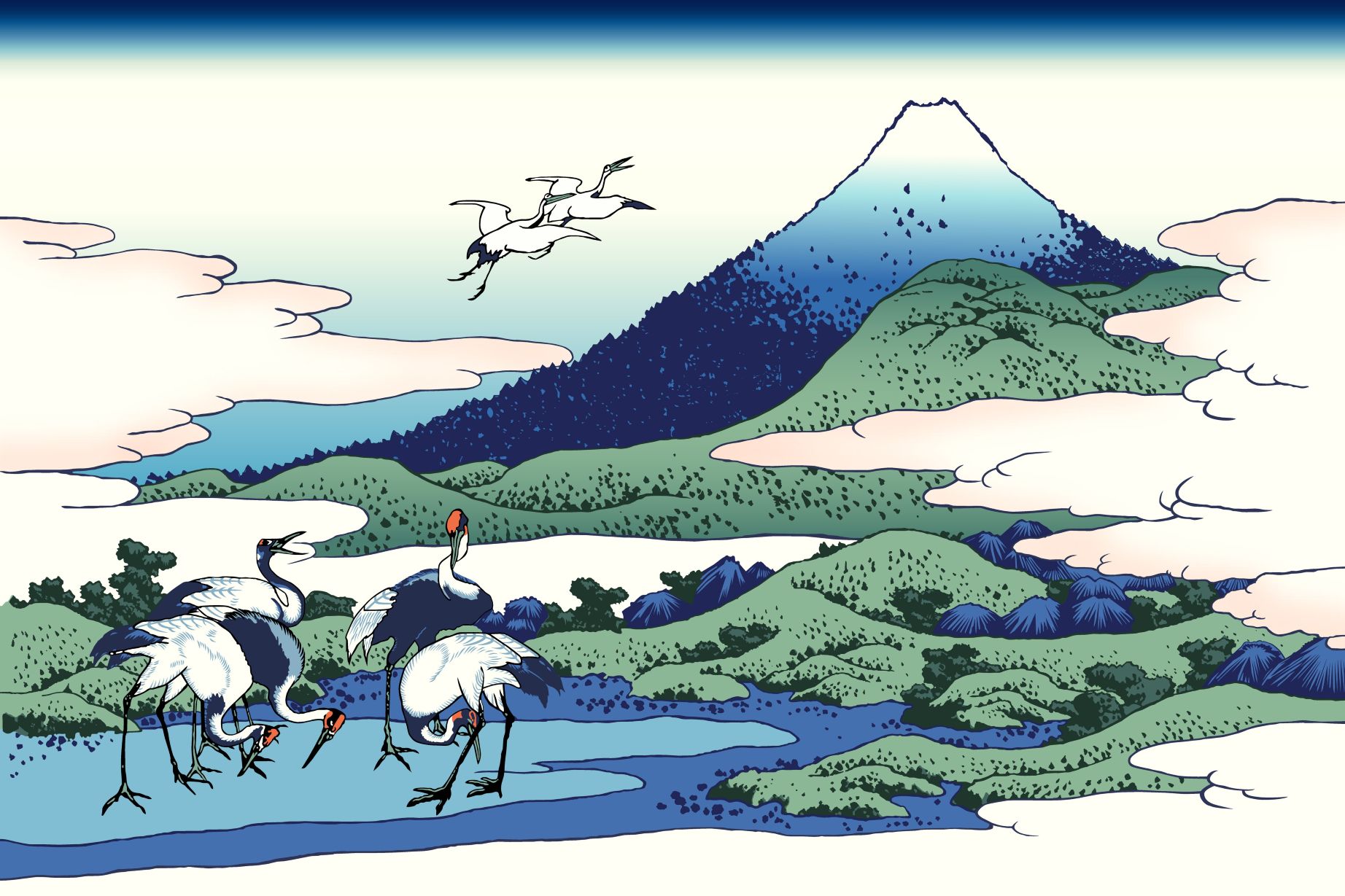
It was with the advent of artists such as Katsushika Hokusai and Utagawa Hiroshige that landscapes, which had traditionally been depicted as backgrounds, came to be treated as independent subjects. Hokusai's 36 Views of Mount Fuji was highly praised around the world for its bold composition and fresh perspective that left a strong impression on viewers. Hiroshige's 53 Stations of the Tokaido were popular with both commoners and travelers as landscapes with a sense of travel and lyricism.
With the development of landscape painting, the subject matter of ukiyo-e became more diverse, covering not only people but also nature and everyday scenes, and evolved into a medium that vividly conveyed the richness of Edo culture and the lifestyles of the townspeople.
6.Woodblock Printing and Society: Information, Satire, and Regulation
Edo woodblock prints played an important role not only as entertainment but also as kawaraban (tile block printing), which conveyed information about events, disasters, and epidemics. Because woodblock prints convey their content visually, they were easily accessible to people who could not read well, and they were a powerful information medium at the time. The tile block prints displayed on street corners and in shops were an indispensable means of keeping up with news and events in everyday life.
At the same time, publications were subject to strict censorship by the shogunate. During periods such as the Tempo Reforms, Kabuki actor prints and Bijinga were subject to crackdowns because they were deemed to promote luxury and pleasure. Under these restrictions, painters sought freedom of expression by avoiding direct expression and using allegory, satire, and metaphor.
As a result, Edo woodblock prints were not only an expression of entertainment and beauty, but also a cultural value that skillfully interweaved society, politics, and satire, serving as a mirror reflecting the lives and sentiments of ordinary people.
7.Changes at the End of the Edo Period and the Decline of Woodblock Printing
In the second half of the 19 century, photographic techniques and lithographic printing were introduced to Japan from the West. This led to the emergence of new media with superior realism and immediacy, and woodblock printing gradually lost its dominance as a means of communicating information. Ukiyo-e, which had been enjoyed as a daily part of townspeople's culture during the Edo period, gradually lost its role in the face of these technological innovations.
During the Meiji period (1868 – 1912), ukiyo-e was temporarily regarded as old-fashioned and vulgar, and there was a period when its reputation declined in Japan. On the other hand, ukiyo-e was highly regarded in Europe and the United States, and its reputation as Japonisme had a great influence on impressionist artists. In this way, there was a gap in the reputation of ukiyo-e both at home and abroad, and ukiyo-e came to be recognized as a part of global art culture.
8.Reevaluation and Inheritance since Modern Times
In the 20 century, the “new woodblock print ” movement, which sought to create a modern expression while making use of the traditional techniques of Edo woodblock printing, and the“ creative woodblock print ” movement, in which the artists themselves took charge of the entire production process, developed. As a result, woodblock printing was reevaluated as a new form of artistic expression and opened the way for the traditional techniques to be handed down to modern times.
Today, in addition to its art-historical value, Edo woodblock printing is attracting attention as a model of creativity through production techniques that have a low environmental impact and the division of labor. The subtle texture and warmth created by the manual process are important elements that are revalued in the digital age, and continue to shine today as unique charms of woodblock printing.
Summary
Edo woodblock printing is a sophisticated visual culture born out of the pastimes and tastes of ordinary people living in cities and the ingenuity of craftsmen and publishers. The development of sumizuri-e and nishiki-e, as well as the innovations and diversification of subject matter in yakusha-e, bijinga, and landscape paintings, reflected the changes in townspeople's culture and society in Edo. In addition, the ingenuity of tile-block printing in conveying information and expressing satire went beyond mere pictures and served as a medium that influenced society.
After a period of decline at the end of the Edo period and reevaluation since the Meiji period, the traditional techniques of Edo woodblock printing are still highly valued today and have been passed down as models of artistic expression and creativity. In this way, tracing the history of Edo woodblock printing provides an important clue to understanding the richness of modern Japanese society, people's values, and culture.





 List of Contents