

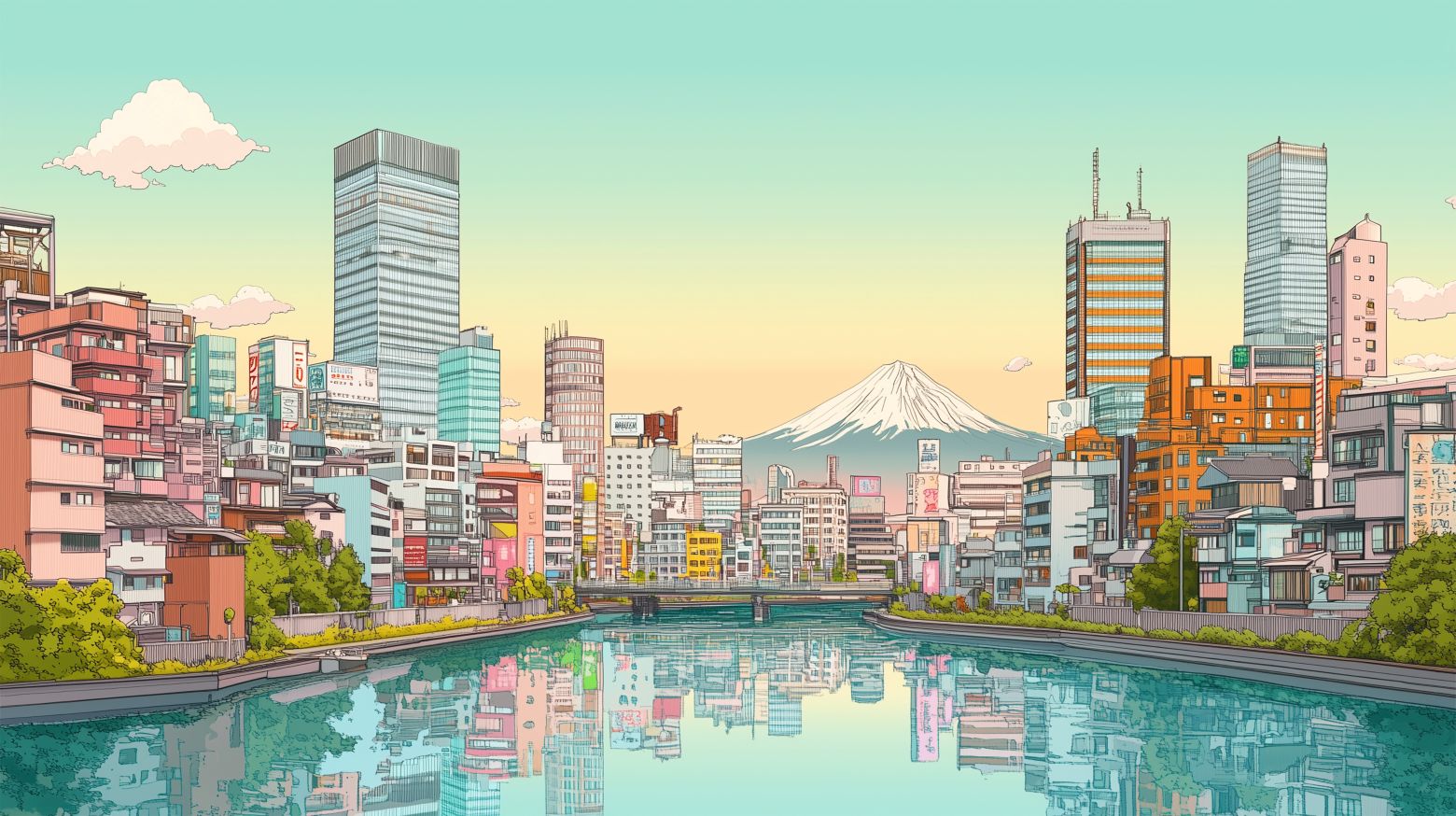


Japanese woodblock prints, or ukiyo-e, which flourished during the Edo period (1603 – 1868), have enriched the lives and culture of ordinary people and have had a significant impact on art history overseas. Their beauty and finesse lie not only in their appeal as paintings, but also in the uniqueness of their techniques. Edo woodblock prints are highly advanced in their engraving, printing, and use of color, and are applied in a variety of ways in modern art and design.
In this article, we will explain the basic techniques of Edo woodblock prints and introduce how they are passed down and applied in modern art and design.
Edo woodblock print techniques
1. Carving techniques
One of the distinctive features of Edo woodblock printing is the technique of “holing, ” in which a picture is carved using a carving knife. Cherry and zelkova (zelkova) trees are mainly used for printing. These trees are hard and durable, making them ideal for carving fine lines and precise details.
The carving process can be broadly divided into two stages. First, the original picture is copied onto the printing block. Then, the lines and surfaces are carved using a carving knife to create a three-dimensional image. The final impression can be greatly influenced by the thickness and depth of the lines, as well as by making subtle adjustments to the areas to be left uncarved, so the skill of the carver determines the degree of completion of the work.
In the Edo period (1603 – 1868), the roles of craftsmen in woodblock printing were clearly divided. Precise and vivid expressions were possible through the cooperation of three groups: the “eshi ” who drew the original picture, the“ horishi ” who carved the block print, and the “surishi ” who printed the colors. This division of labor is an important factor that supports the high level of skill and beauty unique to Edo woodblock printing.
2. Printing techniques
“Suri ” is the process of placing ink or pigment on a carved printing block and transferring the image onto paper. In Edo woodblock printing, multiple printing blocks were used for multicolor printing, and the printing was done by printing each color.
Japanese paper is mainly used for printing. Japanese paper is soft and absorbent, making it possible to express fine lines and blur. In addition, a printer (surishi) can adjust the angle and pressure of the brush to subtly change colors and add gradations to the same plate. This technique creates three-dimensional and deep color expressions in flat line drawings.
The selection and layering of pigments is also important in printing. By devising the combination and order of colors, you can create vivid and harmonious works. Edo woodblock prints achieve their unique beauty through the mutual support of engraving and printing techniques.
3. Ingenuity of Color
The use of color was also an important means of expression in Edo woodblock prints. Natural pigments such as indigo (blue), beni (red), yellow (ochre), and verdigris (green) were used as pigments, and in some cases gold or silver leaf was used to add flair.
One ingenuity in color expression was the way in which colors were layered. In multiplate multicolor printing, woodblocks were divided for each color, and the order of printing and the degree of printing were finely adjusted to create shades, gradations, and expressions of light. This allows a simple line drawing to evoke a deep three-dimensional feel and rich texture.
In the late Edo period, improvements in pigments and dyes led to the use of more vivid and durable colors. Through these efforts, ukiyo-e evolved into works that enhanced the appeal of the subject and left a strong impression on viewers.
Ukiyo-e and Japanese-style rooms
Ukiyo-e and Japanese-style rooms
Theme and design of Edo woodblock prints
Edo woodblock prints cover a wide range of subjects. Typical examples are bijinga, yakushae, landscapes, historical paintings, and depictions of seasonal events and daily life.
・Bijinga: Depictions of women reflecting the fashions and fashions of the Edo period. Detailed depictions of kimono patterns and hairstyles provide clues to the culture of the time.
・Yakushae: Depictions of kabuki actors and famous scenes from plays. Highlights include the actors' expressions and gorgeous costumes.
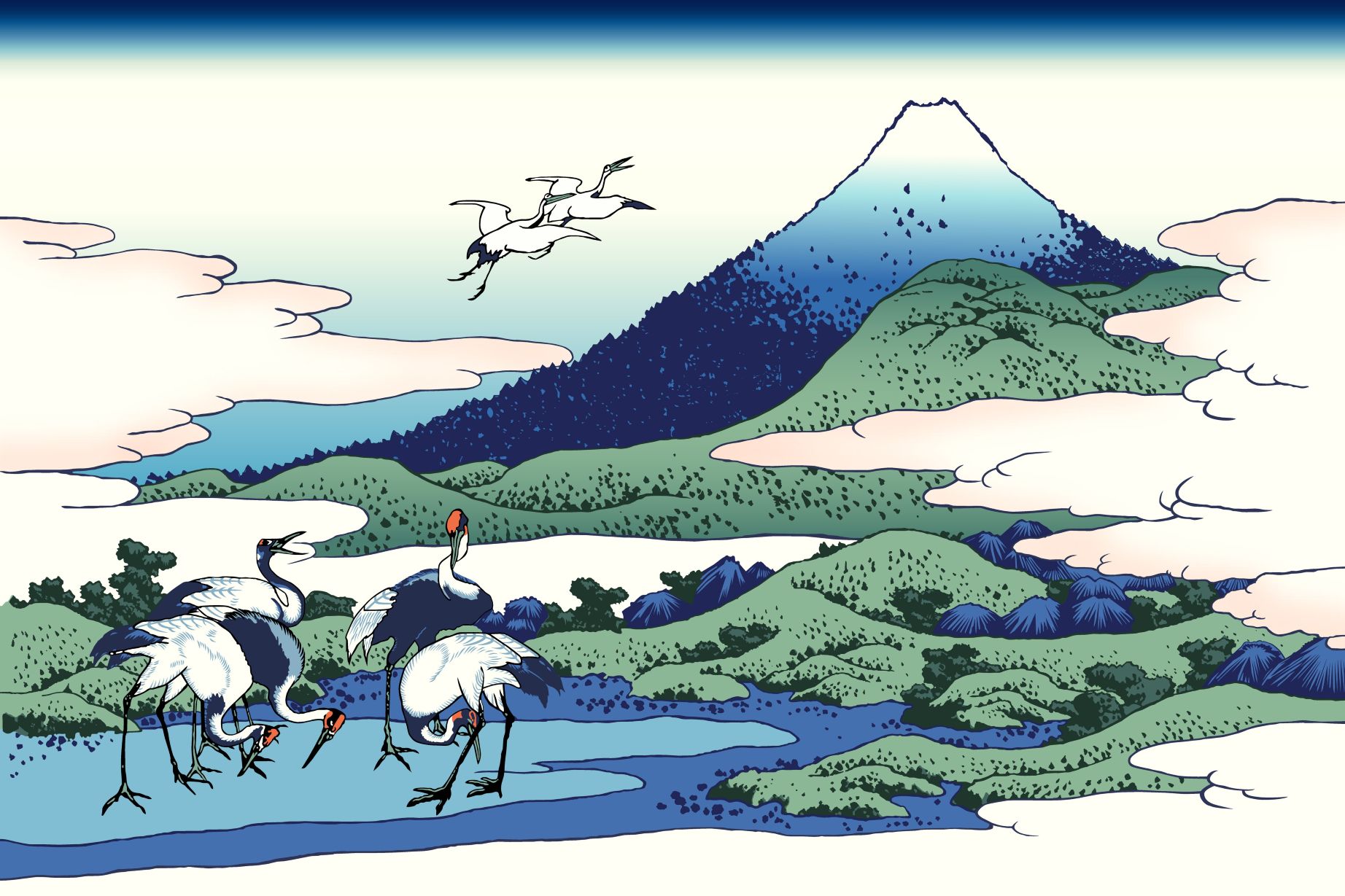
・Landscape paintings: Famous works by Katsushika Hokusai and Utagawa Hiroshige depict famous sites and seasonal landscapes throughout Japan. Through creative use of perspective and composition, these depict a sense of three-dimensionality and space.
・Fuzoku paintings: These depict the lives, festivals, and games of ordinary people to convey the culture of life at the time.
This richness of subject matter is one of the charms of Edo woodblock prints. Their high level of design has also influenced contemporary graphic and product design.
Ukiyo-e by Godotei Kunisada
Shirabyoshi by Katsushika Hokusai
Modern Application of Edo Woodblock Printing Techniques
Contemporary printmakers and artists are pursuing their own expressions while incorporating the techniques of Edo woodblock printing.
For example, Teraoka Masami creates works that combine ukiyo-e compositions and colors with contemporary social and cultural themes, giving a modern interpretation of Edo woodblock printing techniques.
Clifton Calf, an American-born artist, lived in Japan from 1955 and continued to paint landscapes, townhouses, and teahouses until his final years.
Edo woodblock printing is also used in modern advertising, products, and fashion. For example, product packages and labels featuring contemporary arrangements of traditional ukiyo-e motifs attract the attention of consumers with their vivid colors and beautiful lines, and are especially popular with overseas tourists.
There are also fabric and clothing designs that incorporate patterns and compositions from the woodblock prints, which can be applied to kimonos, stoles, bags, and other items in a modern way, creating a blend of traditional and modern styles. Furthermore, ukiyo-e-style murals and posters are used in tourist facilities and public spaces to convey the appeal of historical culture by using scenes and people from the Edo period as motifs.
The multicolor printing technique of Edo woodblock printing has also influenced modern greeting designs such as New Year's cards and postcards. The use of this technique, in which colors are layered on each plate and lines are elaborately expressed, gives printed materials the warmth and depth of a handmade print.
Even today, there are craftsmen who preserve the traditional techniques of Edo woodblock printing, and they continue to hand down the techniques to young artists and craftsmen. These efforts are important not only for preserving the techniques, but also for passing on Edo woodblock printing to future generations as a culture that Japan is proud of.
Ukiyo-e artworks are displayed at the entrance of a conveyor belt sushi restaurant in Ginza, Tokyo.
Ukiyo-e artworks are displayed at the entrance of a conveyor belt sushi restaurant in Ginza, Tokyo.
Summary
Edo woodblock printing is a unique cultural heritage created by the rich sensibilities and advanced techniques of Japan. Its beauty and expressiveness are not merely objects of appreciation, but are applied in various fields such as contemporary art, design, education, and commerce. The ingenuity of color and composition, as well as the techniques of carving and printing, continue to influence today's creative activities, and the tradition of Edo woodblock printing continues to create new expressions and possibilities.



 List of Contents